
Best AI Writing Tools Master Guide
Smarter Writing Starts Here. Honest Reviews, Real Results
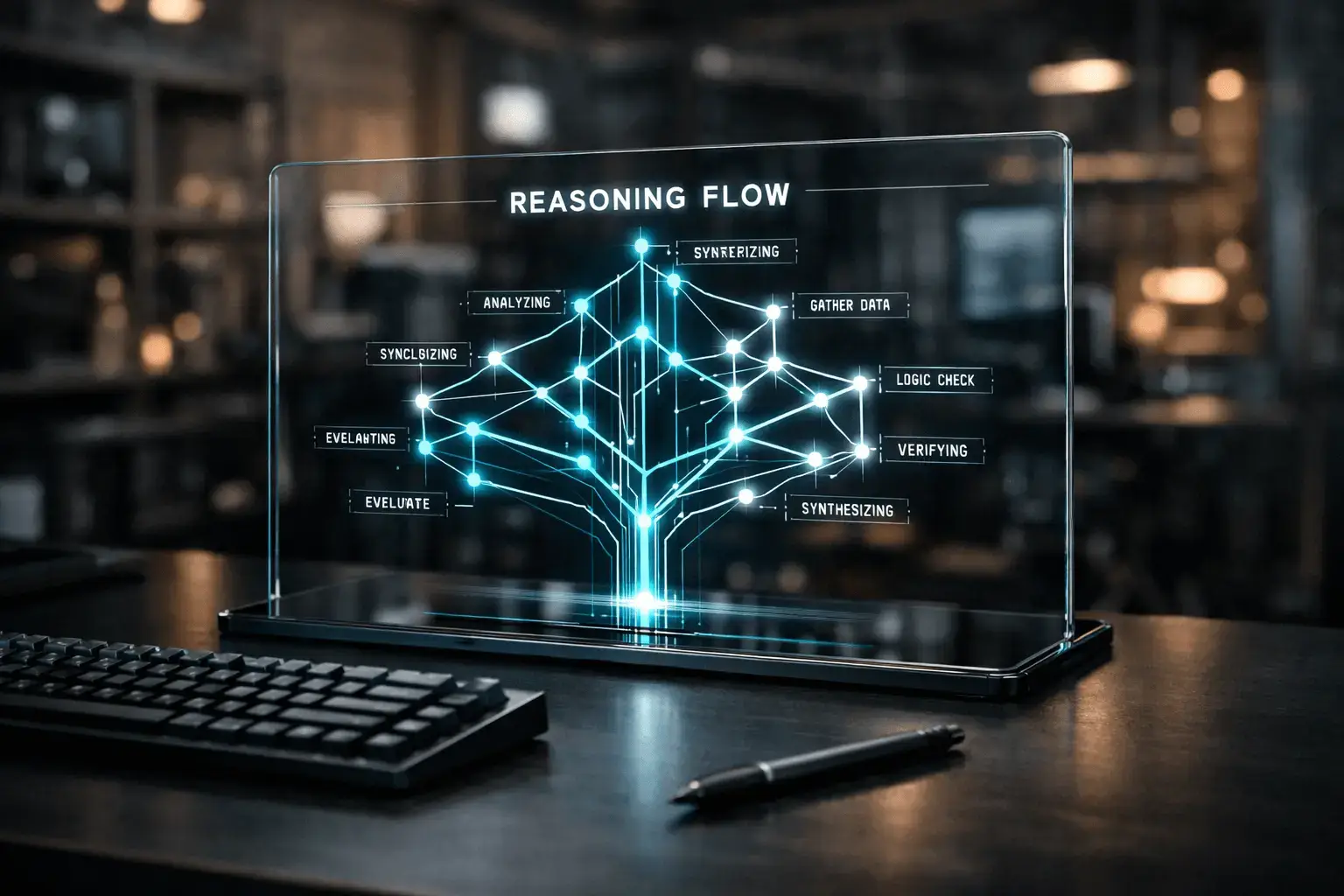
The Reasoning Engine
(Logic & Codee)
Stop chatting and start solving. These tools don’t just predict text—they understand logic, handle deep math, and write code that actually runs.



The Data Hunter
(Search & Scraping)
Cut through the noise. Stop digging through ads and manually copying data; use these “eyes” to scrape the truth and get cited answers instantly.

The Knowledge Synthesizer
(Document Intelligence )
Stop reading every word. “Interview” your 50-page PDFs to find the needle in the haystack in seconds, not hours.


The Workflow Automator
(Agents & Action )
Give your AI “hands.” Move beyond prompting and build systems that connect the brain to your apps to get work done while you sleep.


The Creative Soul
(Human-Like Narrative)
Ditch the robotic fluff. Find a partner that understands rhythm and emotion to help you create a voice that actually sounds like yours.


Engineer’s Corner: 3 Secrets to “True” Realism

The Authenticity Checklist: Is Your Text Ready?
Before you hit publish, run your draft through this filter. Does it feel like a Lead Engineer talking to a friend, or a manual talking to a wall?
- Jargon Check: Did you swap “innovative solution” for the actual name of the tech?
- The “So What?” Test: Does every paragraph provide a new insight, or is it just rephrasing the previous one?
- Source Verification: Are there citations, or is the AI “hallucinating” significance?
- Rhythm Audit: Read it out loud. Does it flow, or do the transitions (like “Furthermore”) feel like a clunky gear shift?
From Autocomplete to Authorship
I remember the early days—AI writing was like a waxy, distorted mirror. It gave you back what you expected, but it looked “wrong.” By 2024, we learned how to prompt for intent.
But today, in 2026, we have reached “Agentic Authorship.” The tools in our Master Guide don’t just fill space; they act as research partners. They understand Information Architecture. At Becomine, we leverage these breakthroughs to ensure our content isn’t just “generated”—it’s engineered to connect.
❓ Frequently Asked Questions: AI Software & Productivity
Is AI writing legal for commercial use?
Yes, but the heart of the matter is authorship. While platforms like Claude or Jasper grant you ownership, the 2026 EU AI Act asks for honesty. A “Human-in-the-Loop” isn’t just a legal safety net; it’s the only way to keep the soul in your work.
Why does my AI writing sound “robotic”?
It’s usually a lack of Persona. If you don’t tell it to “Act as a Senior Technical Architect,” it defaults to the most “boring” statistical average. Use the RACE framework (Role, Action, Context, Expectation) to give it a personality.
Which AI tool is best for hyper-realism?
For lighting and “vibe,” Midjourney is king. For technical precision and control over specific materials (like wheels or glass), we recommend Nano Banana or Stable Diffusion with custom LoRAs.
How do I avoid AI detection?
Don’t focus on “tricking” a filter. Focus on adding value. Detectors look for predictability. By adding your personal anecdotes and non-linear formatting, you create a “Human Signature” that no filter can replicate.
Best AI Writing Tools Master Guide
With Becomine, you don't just generate text—you architect ideas. Dive into our Best AI Writing Tools Master Guide to see how we transform raw data into precision-engineered narratives.